

 By
By During pregnancies, we often see sudden physical changes that can lead to lower back pain.
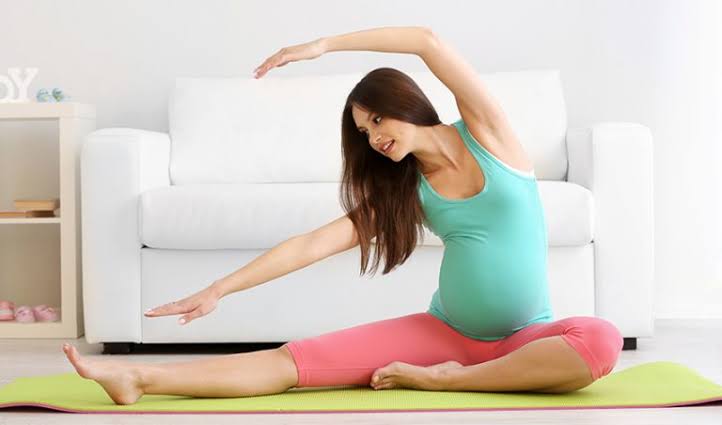
This pain can be relieved by gentle stretching which also improves flexibility and supports better posture.
The stretches mentioned below are all generally considered safe for healthy pregnancies, but you must always consult your healthcare provider.
Why Does Lower Back Pain Occur During Pregnancy?
- Weight gain that increases pressure on the spine.
- Hormonal changes that loosen joints and ligaments.
- Changes in posture as the abdomen grows.
- Weakening of the core muscles.
- Muscle fatigue from carrying additional weight.
Benefits of Pregnancy Back Stretches
- Reduce lower back muscle tension.
- Improve spinal flexibility.
- Increase hip mobility.
- Support better posture.
- Improve circulation.
- Reduce stiffness after sitting or standing.
- Promote relaxation and stress relief.
1. Cat-Cow Stretch
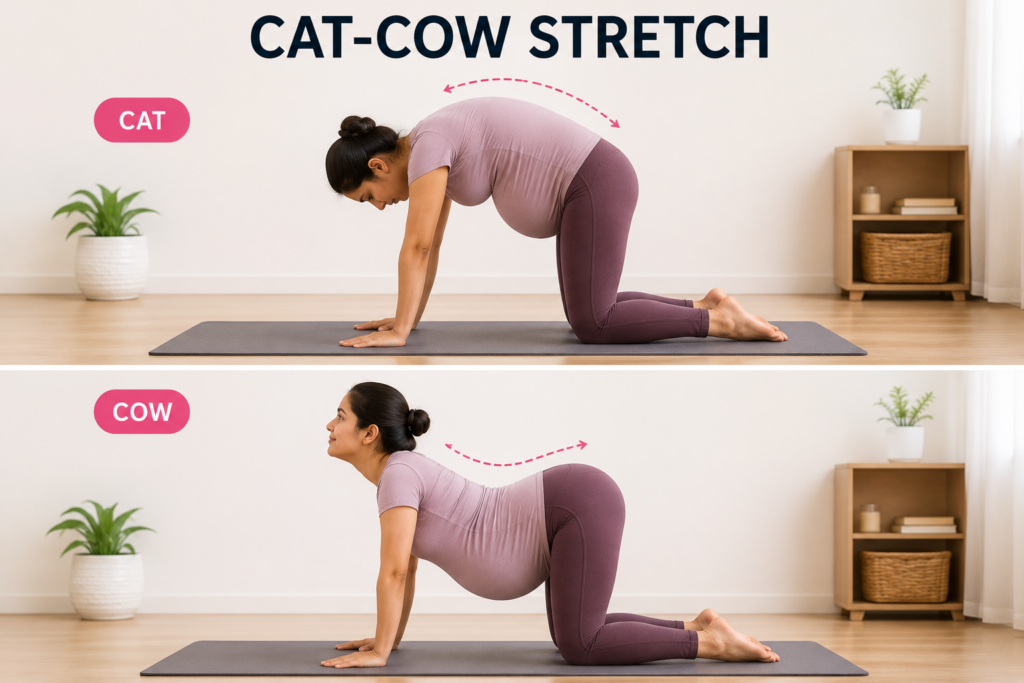
The Cat-Cow Stretch is one of the safest and most effective stretches for relieving lower back pain during pregnancy.
How to Do It
- Start on your hands and knees in a tabletop position.
- Place your hands directly under your shoulders and your knees under your hips.
- Inhale as you gently arch your back, lift your head, and look slightly upward (Cow Pose).
- Exhale as you round your back, tuck your chin toward your chest, and gently draw your belly inward (Cat Pose).
- Continue moving smoothly between the two positions with your breath.
Tips
- Move slowly and avoid sudden or jerky movements.
- Keep your shoulders relaxed and away from your ears.
- Coordinate each movement with your breathing.
- Stay within a comfortable range of motion and avoid over-arching your back.
- Stop immediately if you feel pain, dizziness, contractions, or any unusual discomfort.
Sets & Reps
- Sets: 2-3
- Repetitions: 8-10
- Rest: 30-60 seconds between sets
2. Child’s Pose (Wide Knees)
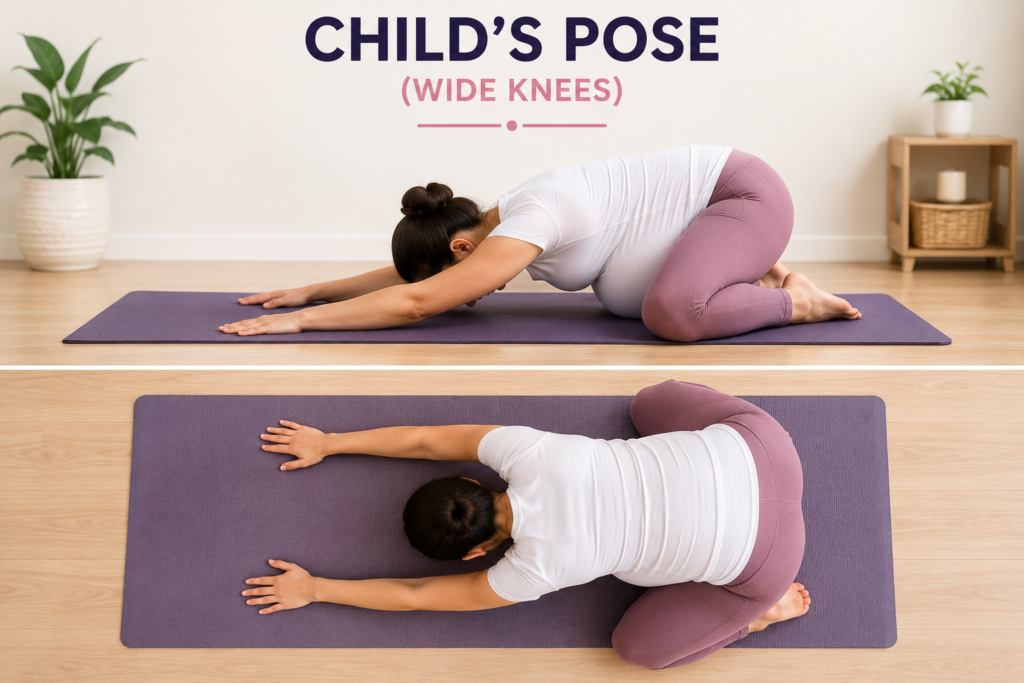
The Child’s Pose (Wide Knees) is a gentle prenatal stretch that helps relieve tension in the lower back, hips, and shoulders.
How to Do It
- Kneel on a yoga mat with your knees wider than hip-width apart.
- Bring your big toes together behind you if comfortable.
- Slowly sit your hips back toward your heels.
- Extend your arms forward with your palms resting on the floor.
- Lower your chest between your knees and rest your forehead on the mat or a pillow.
- Breathe deeply and hold the stretch.
- Slowly return to the starting position.
Tips
- Keep your knees wide enough to comfortably accommodate your belly.
- Place a pillow or yoga bolster under your chest or forehead for extra support if needed.
- Breathe slowly and deeply throughout the stretch.
- Avoid forcing your hips to touch your heels if it feels uncomfortable.
- Stop the stretch if you experience pain, dizziness, contractions, or any unusual discomfort.
Sets & Reps
- Sets: 2-3
- Hold: 20-30 seconds
- Rest: 30-60 seconds between sets
3. Pelvic Tilts
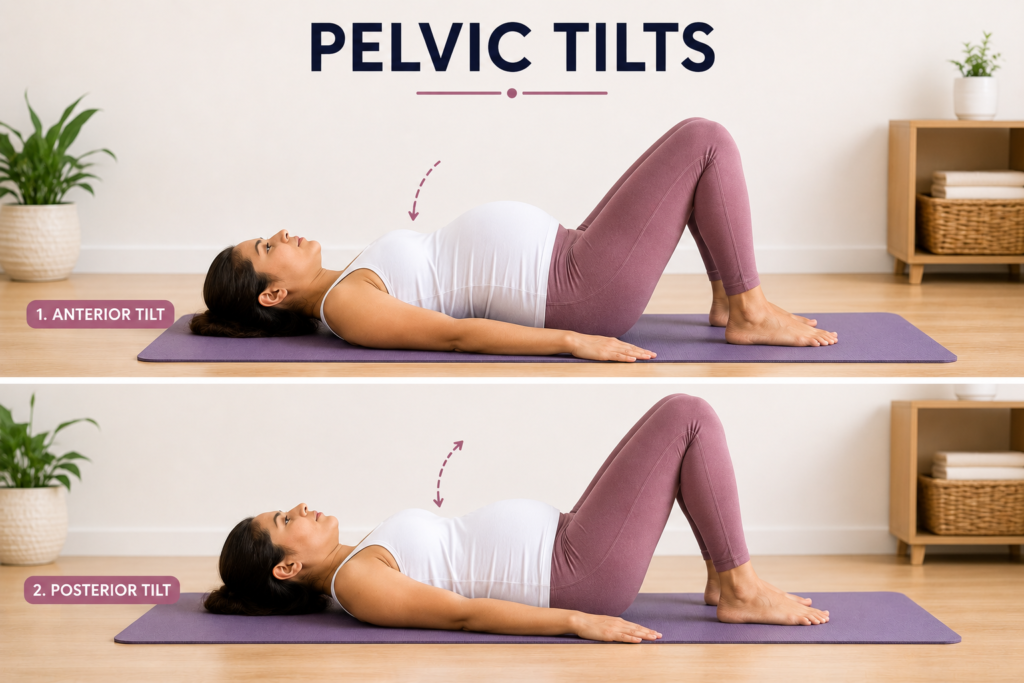
Pelvic Tilts are a gentle prenatal exercise that can help relieve lower back pain by improving pelvic mobility and strengthening the muscles that support the spine.
How to Do It
- Start on your hands and knees with your hands directly under your shoulders and your knees under your hips.
- Keep your back in a neutral position and engage your core muscles.
- Gently tuck your pelvis under, flattening your lower back slightly.
- Hold the position for 2-3 seconds while breathing normally.
- Slowly return to the starting position.
- Repeat the movement in a slow and controlled manner.
Tips
- Perform the movement slowly and avoid jerking your hips.
- Keep your shoulders relaxed and avoid locking your elbows.
- Breathe naturally throughout the exercise.
- Engage your abdominal muscles gently without holding your breath.
- Stop if you feel pain, dizziness, contractions, or any unusual discomfort.
Sets & Reps
- Sets: 2-3
- Repetitions: 10-15
- Rest: 30-60 seconds between sets
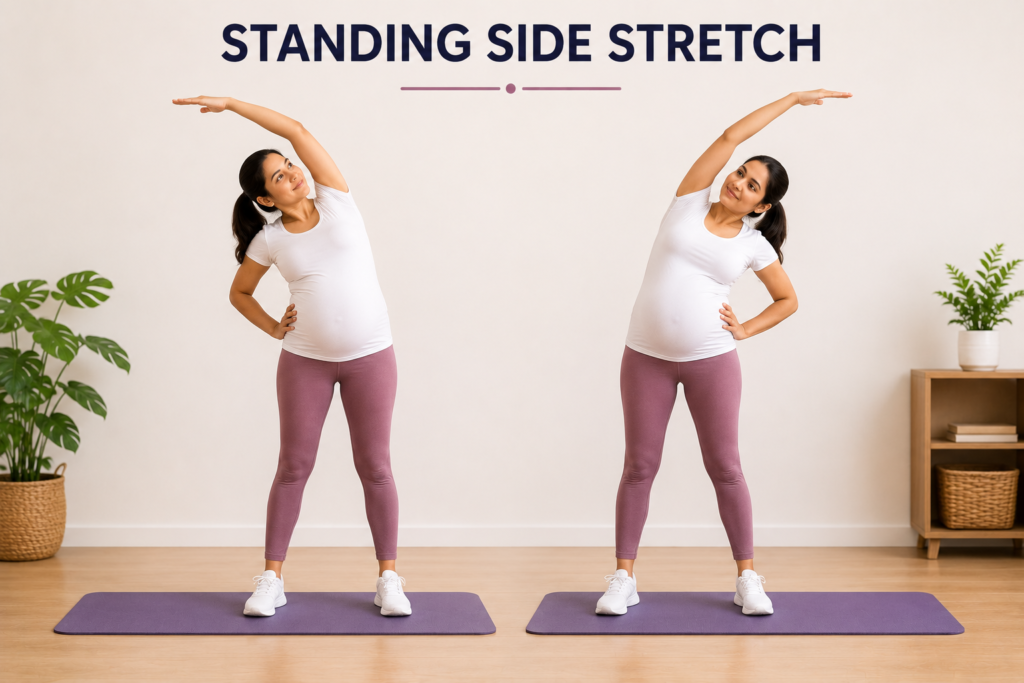
4. Standing Side Stretch
The Standing Side Stretch is a gentle prenatal stretch that helps lengthen the muscles along the sides of the body, lower back, and hips.
How to Do it
- Stand with your feet shoulder-width apart for better balance.
- Keep your knees slightly bent and your back straight.
- Raise your right arm overhead while resting your left hand on your hip or thigh.
- Slowly bend your upper body to the left without leaning forward or backward.
- Hold the stretch while breathing deeply.
- Return to the starting position and repeat on the opposite side.
Tips
- Move slowly and avoid sudden movements.
- Keep your hips facing forward throughout the stretch.
- Do not overextend or force the bend.
- Maintain steady, deep breathing while holding the position.
- Use a wall or sturdy chair for support if you feel unsteady.
- Stop immediately if you experience pain, dizziness, contractions, or any unusual discomfort.
Sets & Reps
- Sets: 2-3 per side
- Hold: 20-30 seconds
- Rest: 30-60 seconds between sets
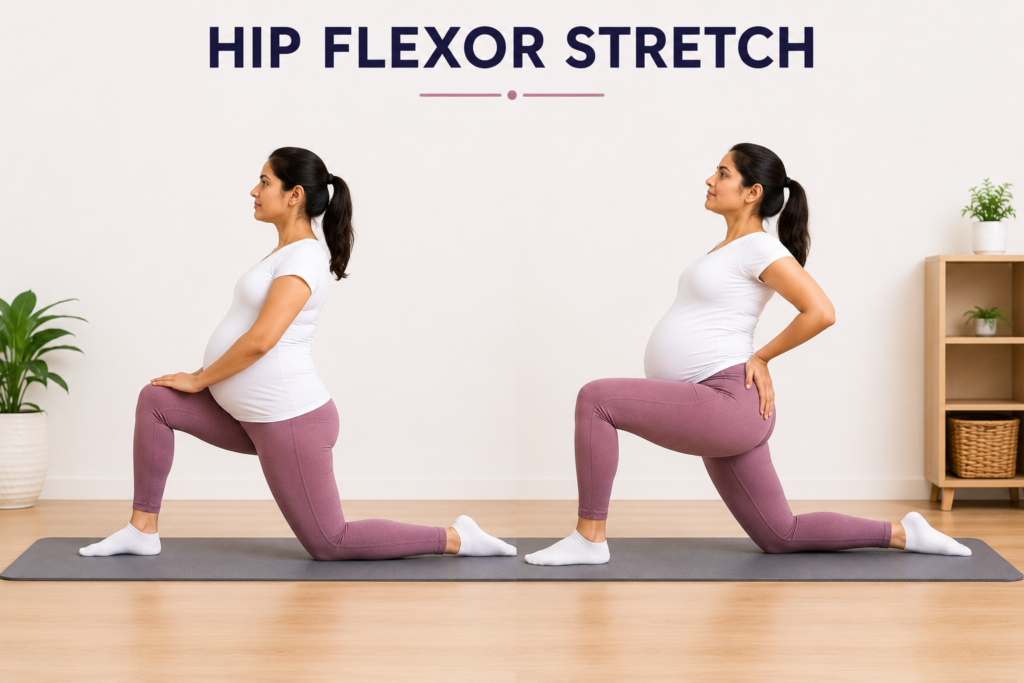
5. Hip Flexor Stretch
The Hip Flexor Stretch is a gentle prenatal exercise that helps reduce tightness in the front of the hips, which can contribute to lower back discomfort during pregnancy.
How to Do It
- Kneel on a soft mat with your right knee on the floor and your left foot placed in front, forming a 90-degree angle.
- Keep your back straight and your shoulders relaxed.
- Gently shift your weight forward until you feel a stretch in the front of your right hip.
- Keep your hips facing forward and avoid arching your lower back.
- Hold the stretch while breathing slowly and deeply.
- Return to the starting position and repeat on the opposite side.
Tips
- Keep your core gently engaged to support your lower back.
- Avoid pushing your hips too far forward or forcing the stretch.
- Maintain an upright posture throughout the movement.
- Place a folded towel or cushion under your back knee for added comfort.
- Breathe slowly and relax into the stretch without bouncing.
- Stop immediately if you experience pain, dizziness, contractions, or any unusual discomfort.
Sets & Reps
- Sets: 2-3 per side
- Hold: 20-30 seconds
- Rest: 30-60 seconds between sets
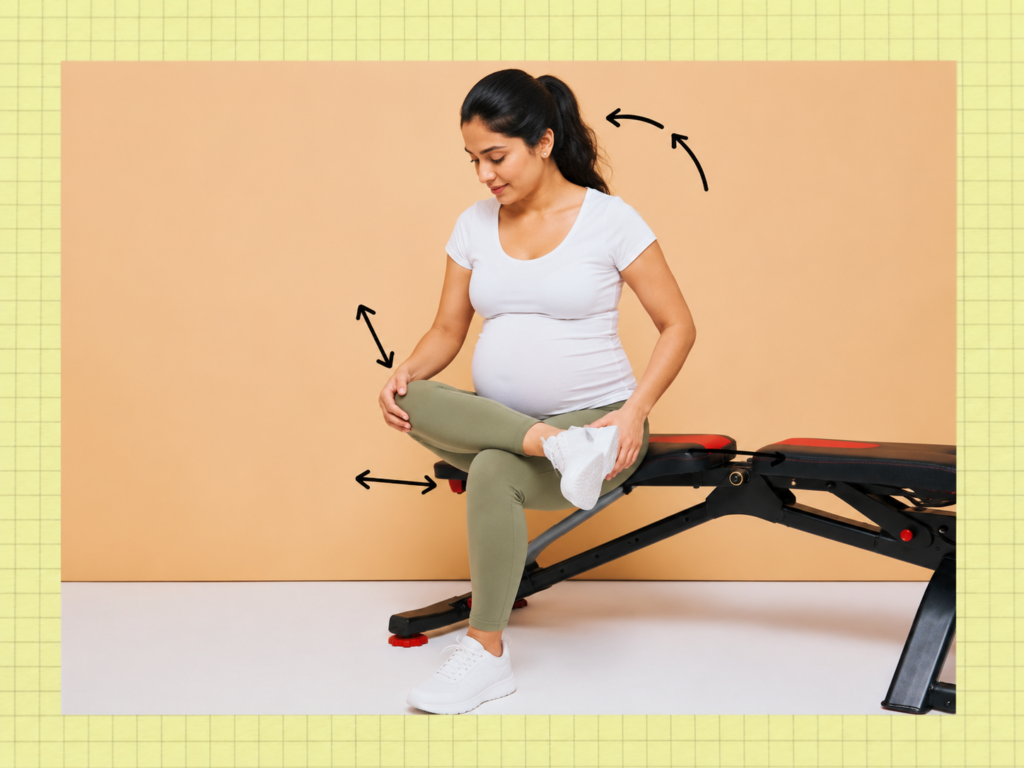
6. Seated Figure Four Stretch
The Seated Figure Four Stretch is a gentle, pregnancy-friendly stretch that targets the glutes, outer hips, and piriformis muscle.
How to Do It
- Sit on a sturdy chair with both feet flat on the floor.
- Place your right ankle on top of your left thigh, just above the knee, creating a figure-four shape.
- Keep your back straight and your shoulders relaxed.
- Gently lean your upper body forward until you feel a stretch in your right hip and glute.
- Hold the stretch while breathing slowly and evenly.
- Return to the starting position and repeat on the opposite side.
Tips
- Sit on a stable chair with your feet firmly planted on the floor.
- Keep your back straight and avoid rounding your shoulders.
- Lean forward only until you feel a gentle stretch.
- Do not press down on your raised knee.
- Breathe slowly and avoid bouncing during the stretch.
- Stop immediately if you experience pain, dizziness, contractions, or any unusual discomfort.
Sets & Reps
- Sets: 2-3 per side
- Hold: 20-30 seconds
- Rest: 30-60 seconds between sets
7. Seated Piriformis Stretch
The Seated Piriformis Stretch is a gentle, pregnancy-friendly stretch that targets the piriformis muscle deep in the buttocks.
How to Do It
- Sit upright on a sturdy chair with both feet flat on the floor.
- Cross your right ankle over your left knee, forming a figure-four position.
- Keep your back straight and your shoulders relaxed.
- Gently lean your upper body forward from your hips until you feel a stretch in your right buttock and outer hip.
- Hold the stretch while breathing slowly and evenly.
- Return to the starting position and repeat on the opposite side.
Tips
- Sit on a stable chair with your feet firmly supported.
- Keep your spine neutral and avoid rounding your back.
- Lean forward only until you feel a gentle stretch—never force the movement.
- Breathe slowly and relax your muscles throughout the stretch.
- Avoid pressing down on the raised knee.
- Stop immediately if you experience pain, dizziness, contractions, or any unusual discomfort.
Sets & Reps
- Sets: 2-3 per side
- Hold: 20-30 seconds
- Rest: 30-60 seconds between sets