


 By
By Do your joints feel like they need a few minutes to “warm up” after you get out of bed? You’re not alone. Sitting for long periods, sleeping in one position, or simply not moving enough during the day can leave your hips, shoulders, back, and ankles feeling tight in the morning. The good news is that you don’t need a long workout to get moving more comfortably. This simple 10-minute morning mobility routine can help you gently wake up your body and start the day feeling less stiff.
Why a 10-Minute Morning Mobility Routine Can Help
Mobility is basically your ability to move a joint through a comfortable range of motion. It is slightly different from simply stretching.
A traditional stretch often involves holding a position for a period of time. Mobility exercises usually combine gentle movement and control. Instead of forcing your body into a deep stretch, you move slowly through a comfortable range.
That makes mobility work a useful way to start your morning.
Think about what happens when you first wake up. You probably don’t jump out of bed and immediately start sprinting. Your body needs a little time to transition from resting to moving.
A few minutes of controlled movement can help you gradually loosen up areas that feel tight.
This routine is especially useful if you:
- Wake up with stiff hips or knees
- Spend many hours sitting during the day
- Feel tight through your upper back and shoulders
- Have limited ankle or hip movement
- Want a gentle morning routine instead of an intense workout
- Are getting back into exercise after being inactive
You should never feel like you are forcing a joint through pain. The goal is smooth, comfortable movement.
The 10-Minute Morning Mobility Routine
You can do this routine beside your bed, on a yoga mat, or even on a small amount of floor space.
Move slowly and breathe normally. There is no need to rush just because the routine is only 10 minutes.
1. Neck Turns and Tilts — 1 Minute

Start standing or sitting comfortably.
Keep your shoulders relaxed and slowly turn your head to look over your right shoulder. Return to the center, then turn toward the left.
After several repetitions, gently tilt your right ear toward your right shoulder and return to the center. Repeat on the other side.
Keep the movement small and controlled.
Try: 5-8 slow repetitions in each direction.
Why it helps: This is a simple way to get your neck moving after spending hours in one sleeping position or looking down at a phone.
Avoid making large circles with your head, especially if they feel uncomfortable.
2. Shoulder Rolls — 1 Minute
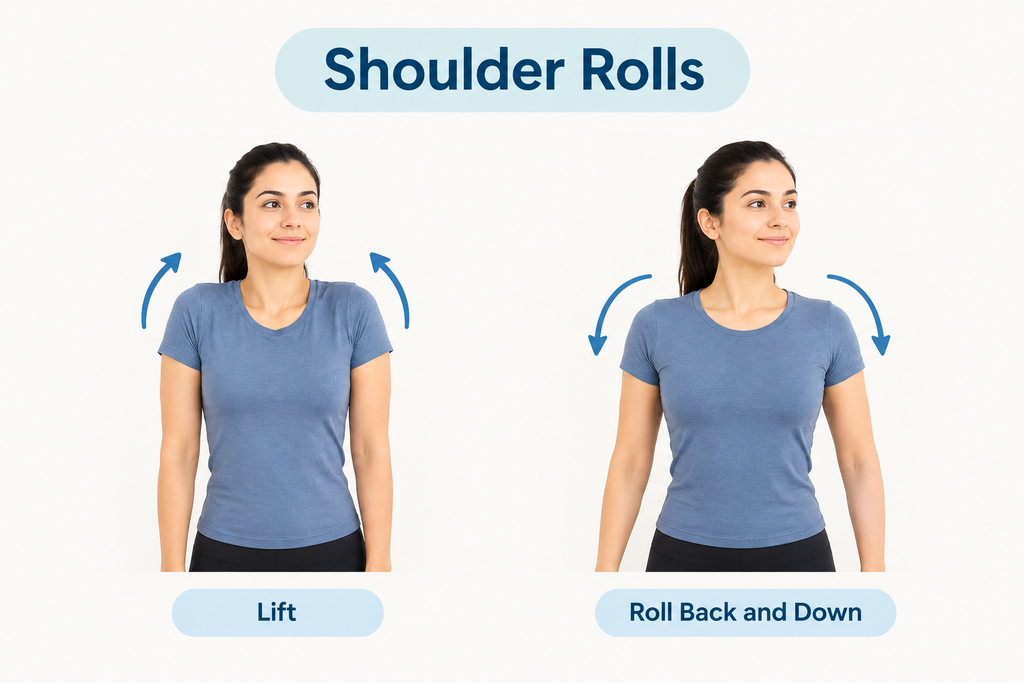
Stand tall with your arms relaxed by your sides.
Slowly lift your shoulders toward your ears, move them backward, then let them drop down. Continue making slow circles.
After about 30 seconds, reverse the direction.
Don’t worry about making huge circles. Smooth movement is more useful than trying to force a bigger range.
Try: 8-10 circles in each direction.
This exercise is particularly handy if your shoulders and upper back feel tight first thing in the morning.
3. Cat-Cow — 1 Minute
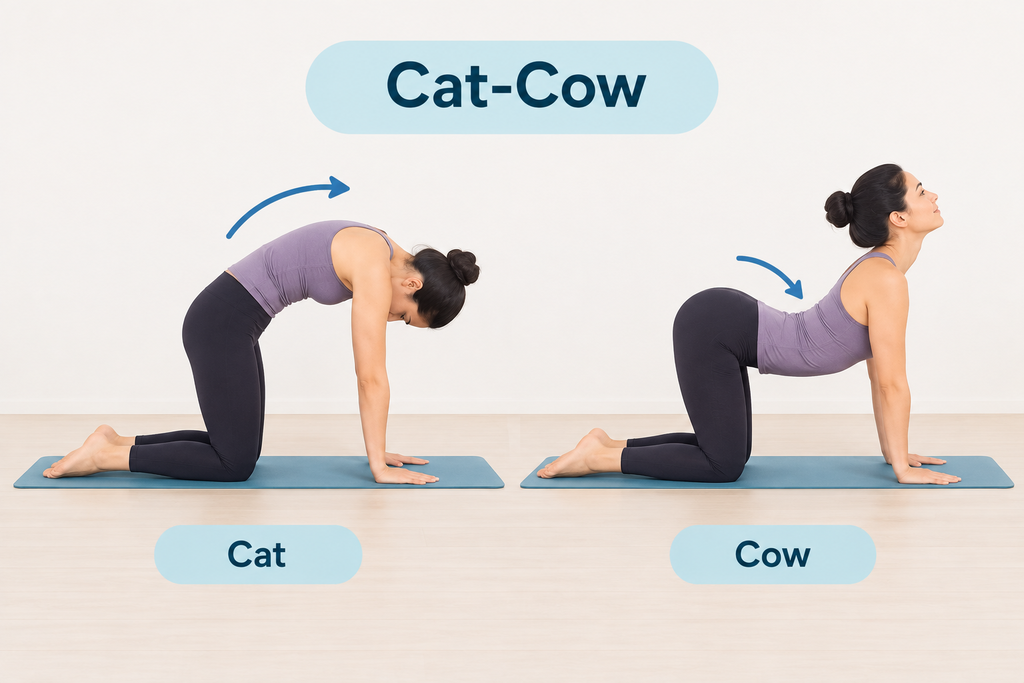
Get onto your hands and knees with your hands under your shoulders and knees under your hips.
As you inhale, gently lift your chest and allow your spine to extend. As you exhale, slowly round your back and let your head move slightly downward.
Continue moving between the two positions.
Think of this as waking up your spine rather than trying to stretch it as far as possible.
Try: 6-10 slow repetitions.
If getting onto the floor is uncomfortable, you can perform a similar movement while standing with your hands against a wall.
4. Thoracic Rotation — 1 Minute
Stay on your hands and knees.
Place your right hand lightly behind your head. Slowly rotate your upper body and elbow toward the ceiling. Return to the starting position.
Repeat on the other side.
The movement should come mainly from your upper back. Try not to twist aggressively through your lower back.
Try: 5-6 repetitions per side.
This is a useful addition to a morning mobility routine for stiff joints because it encourages movement through the upper back while keeping the exercise gentle.
5. Hip Circles — 1 Minute
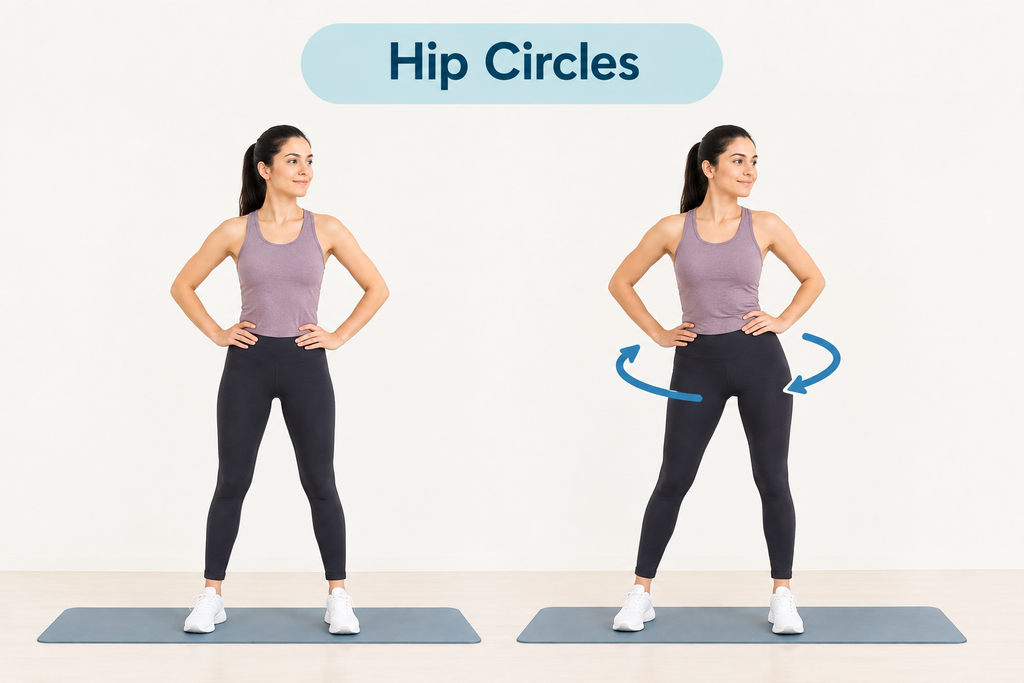
Stand with your feet about hip-width apart. You can hold onto a wall or chair if you need extra balance.
Lift your right knee slightly and make small controlled circles with your hip. After several repetitions, switch sides.
Don’t worry about making large circles. Start small and gradually increase the range if it feels comfortable.
Try: 20–30 seconds on each side.
If balancing on one leg is difficult, keep your toes lightly touching the floor and make the movement smaller.
6. Bodyweight Good Morning — 1 Minute
Stand with your feet around hip-width apart and place your hands across your chest.
Keep a slight bend in your knees. Push your hips backward while keeping your back comfortably straight. Lean forward slightly, then squeeze your hips and return to standing.
This is not a deep forward fold.
Imagine someone is pulling your hips backward.
Try: 8-12 slow repetitions.
This movement helps you practice bending from your hips instead of simply rounding your lower back.
7. Ankle Rocks — 1 Minute
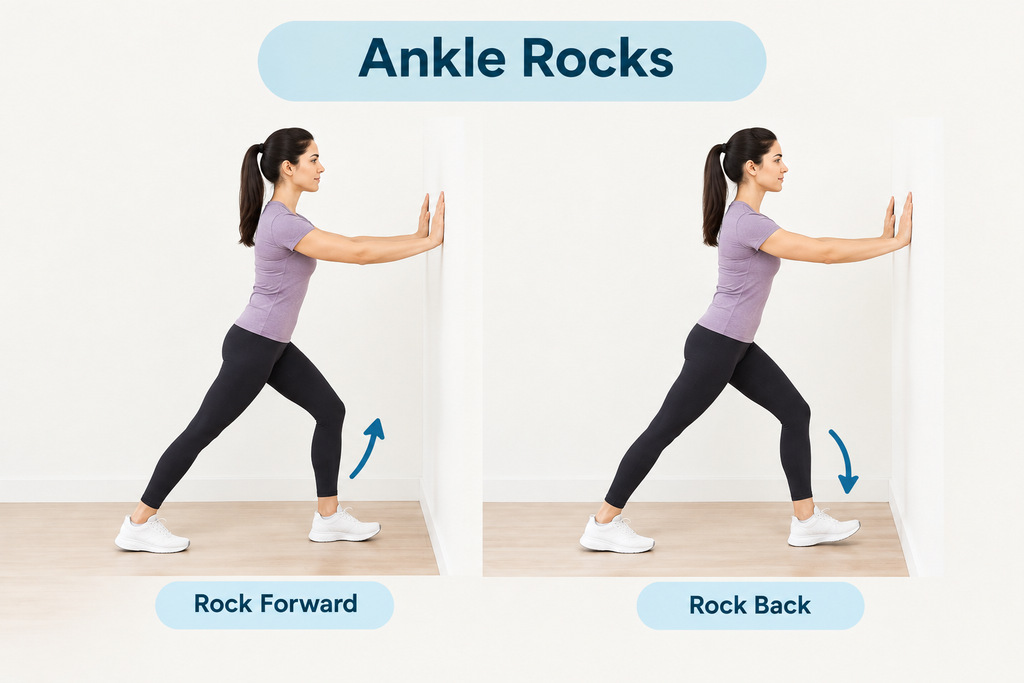
Stand facing a wall and place your hands against it for support.
Put one foot slightly in front of the other. Keeping your front heel on the floor, slowly move your knee forward toward the wall.
Then move it back.
The heel should stay down throughout the movement.
Switch sides after about 30 seconds.
Try: 8-10 repetitions per side.
Ankles often get overlooked, but their ability to move comfortably can affect how you squat, walk, climb stairs, and exercise.
8. Supported Squat Hold — 1 Minute
Stand in front of a sturdy chair or hold onto a countertop.
Slowly lower yourself into a comfortable squat. You don’t need to go all the way down.
Keep your feet planted and your knees tracking comfortably in the same general direction as your toes.
Hold for a few seconds, then stand back up.
Try: 5-6 slow repetitions or short 5–10-second holds.
If squatting feels uncomfortable, reduce the depth or simply practice sitting down and standing up from a chair.
9. Standing Side Reach — 1 Minute
Stand tall with your feet comfortably apart.
Raise your right arm overhead and gently reach toward the left side. Return to the center and switch sides.
Keep both feet planted.
You should feel a gentle stretch along your side rather than a sharp pull.
Try: 4-5 slow repetitions per side.
This is an easy movement to add when your torso feels stiff after sleeping or sitting.
10. Easy Full-Body Movement — 1 Minute
Finish with something simple.
Walk around the room, march gently in place, swing your arms naturally, or perform slow alternating knee lifts.
The idea is to finish your 10-minute morning mobility routine with relaxed, full-body movement.
You don’t need to turn this final minute into cardio. Just keep moving.
A Simple Way to Make the Routine Stick
The biggest mistake is making your morning routine so complicated that you stop doing it after a few days.
You don’t need a perfect setup.
Try keeping your exercise mat beside your bed. When you get up, drink some water, put on comfortable clothes, and start moving.
You can also connect the routine to something you already do every morning.
For example:
Wake up → drink water → 10-minute mobility routine → breakfast
After a while, the routine becomes part of your normal morning rather than another task you have to remember.
And if you only have five minutes one morning, don’t skip it completely. Do neck turns, shoulder rolls, Cat-Cow, hip circles, and ankle rocks.
Five minutes of gentle movement is still movement.
When Should You Do Morning Mobility?
The best time is the time you can consistently manage.
Morning mobility works well because you’re starting the day after several hours of relatively little movement. But there is no rule saying mobility exercises must happen immediately after waking.
You can do the routine after breakfast or before starting work if that fits your schedule better.
If your body feels particularly stiff when you wake up, spend extra time on the movements that feel comfortable and keep the range of motion smaller at first.
As your body warms up, your movements may naturally become easier.
What If Your Joints Actually Hurt?
There’s a difference between feeling stiff and experiencing pain.
A little tightness or resistance during movement can be normal. Sharp, severe, or worsening pain is different.
Don’t force a painful joint just because an exercise is supposed to be “good for mobility.” Reduce the range of motion, stop the movement, or choose a gentler alternative.
If you regularly experience significant joint pain, swelling, numbness, weakness, or unexplained symptoms, it’s worth speaking with a qualified healthcare professional rather than relying on a mobility routine alone.
The Quick 10-Minute Version
If you want to save this routine for later, here’s the complete sequence:
- Neck turns and tilts — 1 minute
- Shoulder rolls – 1 minute
- Cat-Cow – 1 minute
- Thoracic rotations -1 minute
- Hip circles – 1 minute
- Bodyweight good mornings – 1 minute
- Ankle rocks – 1 minute
- Supported squat – 1 minute
- Standing side reach – 1 minute
- Easy full-body movement – 1 minute
The entire routine takes just 10 minutes.
Final Thoughts
A good 10-minute morning mobility routine doesn’t need to leave you sweaty or exhausted. Its purpose is much simpler: get your body moving, gently work through comfortable ranges of motion, and help you transition from rest into your day.
Start slowly, focus on smooth movements, and don’t force stiff joints into uncomfortable positions. Most importantly, make the routine easy enough that you can actually stick with it.
Try it tomorrow morning and pay attention to how your body feels before and after those 10 minutes. Small movement habits can be surprisingly useful when you make them consistent.